Menu

Introduction to NZMRM Sustainability


This Section of the NZMRM Website provides background articles as published by Scope and elsewhere and links to relevant other websites

Steel is Immortal

The east side of the Iron Bridge, Shropshire in February 2019 showing the dark red paint added in the 2018 restoration.

Once made from iron ore, or in NZ, ironsand, steel actually does last forever, unchanged atomically, and can be remade into any number of products, with its properties unchanged.

In this section of the COP we look at the varied aspects of sustainability of NZ made steel.

 

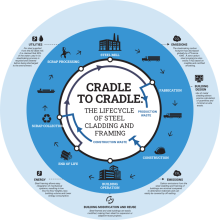
Cradle to Cradle – the Lifecycle of steel cladding and framing

Using New Zealand sourced and formed steel cladding for your house, warehouse or factory, you can be confident it adds to the overall sustainability of your project.

Recycling & Recyclability

Recent initiatives by New Zealand Steel and by Pacific Coil Coaters, our primary suppliers of metallic coated and painted steel, will improve the sustainability of their operations.

Sweden's grand plan to make zero-carbon steel

By: Richard Orange for the Telegraph

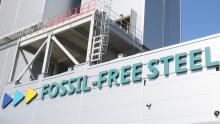
It's December and less than 100 miles from the Arctic circle. But while Svartön ("black island") – the heavily industrialised peninsular around HYBRIT, Sweden's pilot fossil-free steel plant – is already dusted by a thin ...

Green Steel using Green Hydrogen

Sweden is at the forefront of using green hydrogen for steel production, aiming to decarbonize a traditionally carbon-intensive industry.

Several companies and projects are actively developing and implementing hydrogen-based steelmaking processes, with the goal of significantly reducing...

Green Steel

Dream or possibility?

In New Zealand the Robinson Research Institute, at Victoria University of Wellington, in collaboration with NZ Steel, is working on development of a pilot plant to produce steel using hydrogen as reductant.


NZ Steel Supporting New Zealand’s climate transition

In 2023, BlueScope announced that New Zealand Steel is to build an electric arc furnace (EAF) to secure the future of lower GHG emission steelmaking at Glenbrook Steelworks

Read article

Sustainable Transport

As sustainability becomes more of an issue around the world, attention has been focused not only on how a product is made but also how raw materials are collected and how the product is distributed.

Transporting materials to a factory and then shipping out the finished product are...

Our Common Future (Brundtland report 1987)

"A global agenda for change" - this was what the World Commission on Environment and
Development was asked to formulate.

It was an urgent call by the General Assembly of the United Nations.

Sustainable and Potable Water

Even in rain-rich New Zealand we are increasingly talking about control of water, water rationing, depletion of aquifers, and so on.  At the same time we are increasingly suffering from downpours (mostly uncaptured) and flooding, as shown in the Hawkes Bay catastrophe of 2023.

Solar Energy Panels & Metal Roofing

NZMRM has been involved in discussions about solar water heating panels before and has contributed to the MBIE G12/AS2 and “Solar Water Heaters - Guidance for suppliers, installers and building consent authorities”.

While we have seen  seen some disillusion with solar water heating, and...

Life Cycle Assessment (LCA) and Embodied Energy

NZ Steel's Life Cycle Assessment (LCA) and Embodied Energy analysis

Modernisation of NZ made coil production

Two key providers of materials to the NZ Roofing and Cladding Industry are making substantial upgrades to the efficiency of their processes:

  • The PCC Oven Upgrade
  • NZ Steel Glenbrook Electric Arc Furnace

Metal Roofing In New Zealand: A History

With an estimated market share of around 70%, New Zealand has one of the highest percentages of prepainted and roll formed long run metal used in roofing in the world.

So how has our love affair with what is commonly called “tin roofs” developed?

Links to related sustainability resources

Links to related organisations working toward sustainable manufacturing and supply processes