
Revolutionary build


NZ Steel an integral part of ground-breaking home
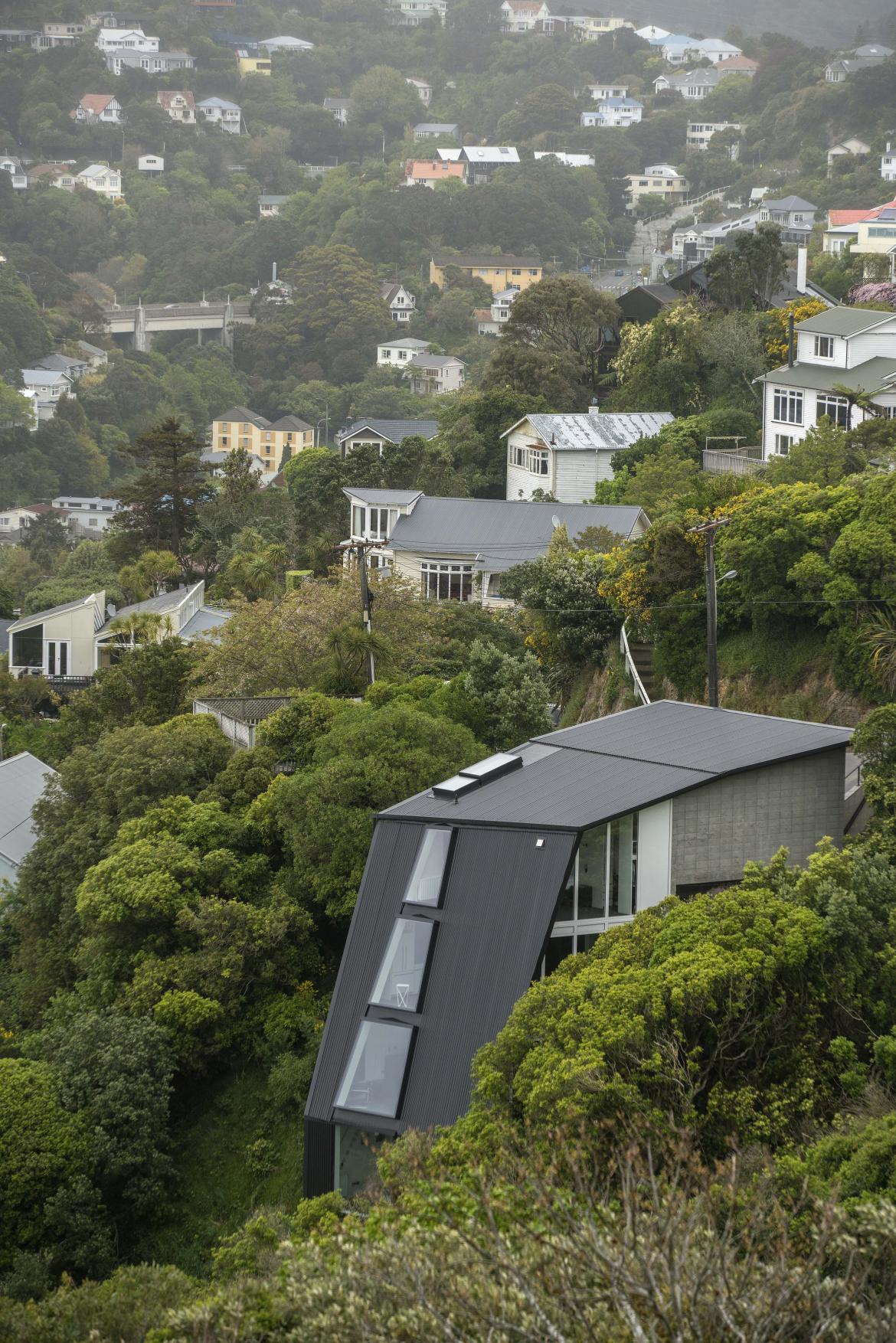
Most people didn’t think it was possible to build on a 20-degree slope until pole houses were proven viable in the 1970s. But building on “insane” slopes of 45-degrees-plus had defied all safe construction efforts until Nic Ballara of Ballara Bulman Chin Architects built his own house on just that.
Sections this steep are not uncommon in Wellington, but building sites are normally achieved by terracing or excavating a single building platform and connecting with the street via stairs or a small cable car.
“I wanted to try something different, and in so doing create a prototype for Wellington. I wanted to prove it’s possible to turn an inhospitable site into an effective and efficient building site,” explains Nic. “No known housing typology was going to work here, so the brief became to invent one – then wait for consents.” It was a revolutionary build that also attracted the attention of the “Grand Designs New Zealand” television programme in late 2015.
The simplicity of the external design belies the many engineering and technical challenges the site presented.
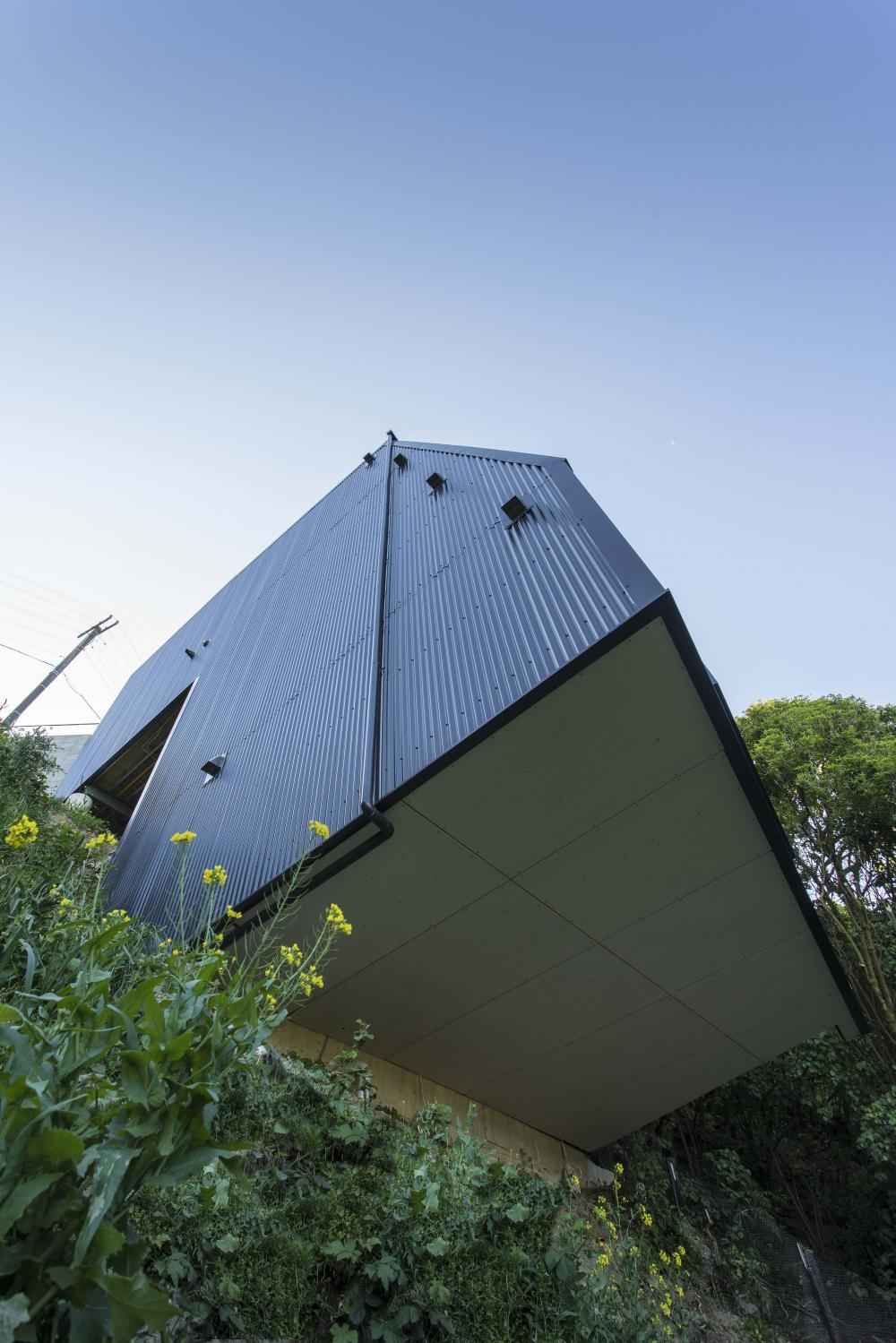
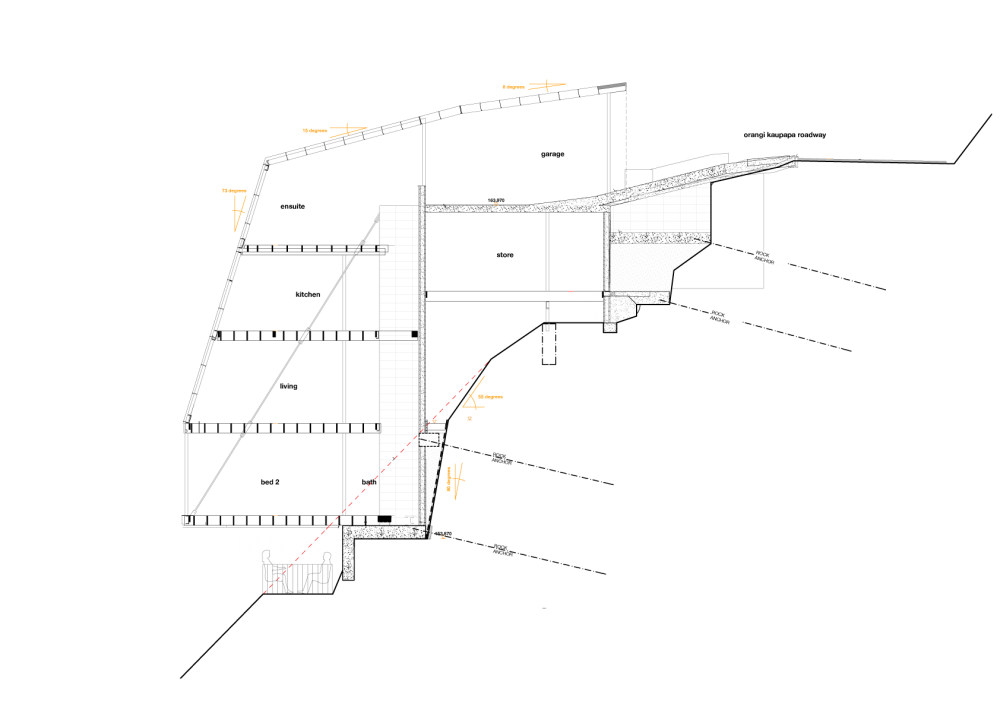
Engineers, architects and builders all collaborated on a design that ultimately turned traditional construction methods on their side. A suspended Hibond tray and concrete slab for the garage faces the road at the top of the cliff, and joins a 12-metre vertical concrete slab which drops down the cliff face. This bears the bulk of the house’s weight and is secured with 11 steel ties spread over the area and anchored deep into bedrock within the cliff itself. It stops at the small foundation which is grounded 17 metres below the road.
It’s as seismically safe as it’s possible to be.
The build exceeds all current maximum Standards, and the house is engineered to withstand stresses in excess of 10 times its own 30-tonne weight. “It’s probably the safest house on the street,” says Nic, “despite looking as if it just hangs off the cliff.”
His innovative design means the house stretches in two different directions and is wider at the bottom than the top. 3D CAD modelling was absolutely vital to ensure materials were cut precisely before being delivered to site – “Something that’s possible when working with the precision of manufactured steel,” explains Nic. “As well, we could demonstrate to Council how geotechnical questions would be answered, the house constructed and services be delivered safely.”
Once completed, Council found there was less than 20mm difference from plan over the whole build. “We couldn’t have interacted as successfully with suppliers and Council without that CAD program,” he says. “It saved a lot of time!”
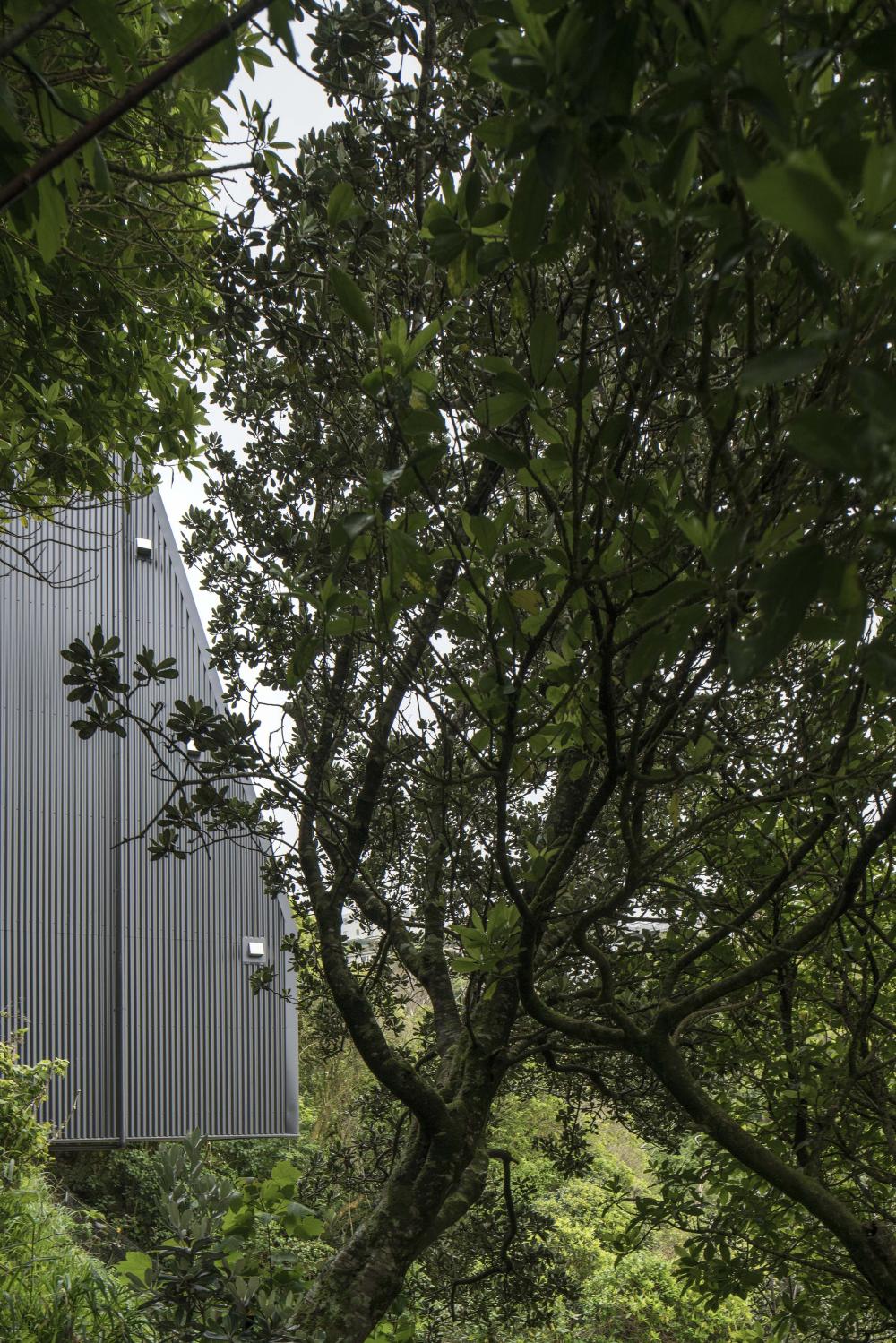
NZ Steel products were specified because of their relatively light weight and inherent strength and rigidity – important considerations to help ensure maximum stability on the slope. COLORSTEEL®Naxx® Flaxpod in Metalcraft Roofing profile was specified for the roofing and cladding, with Axxis steel framing for the house supplied by Frametek and with Speedfloor steel floor joists manufactured by Rollforming Services Ltd.
“Steel not only provided a rigid frame but allowed us to build upwards confidently (there is only one square corner in the whole building), have a glass wall that stretches over four levels, and use interesting angles throughout the structure without unnecessary strengthening,” he explains.
“Weight had to be a constant consideration as well.”
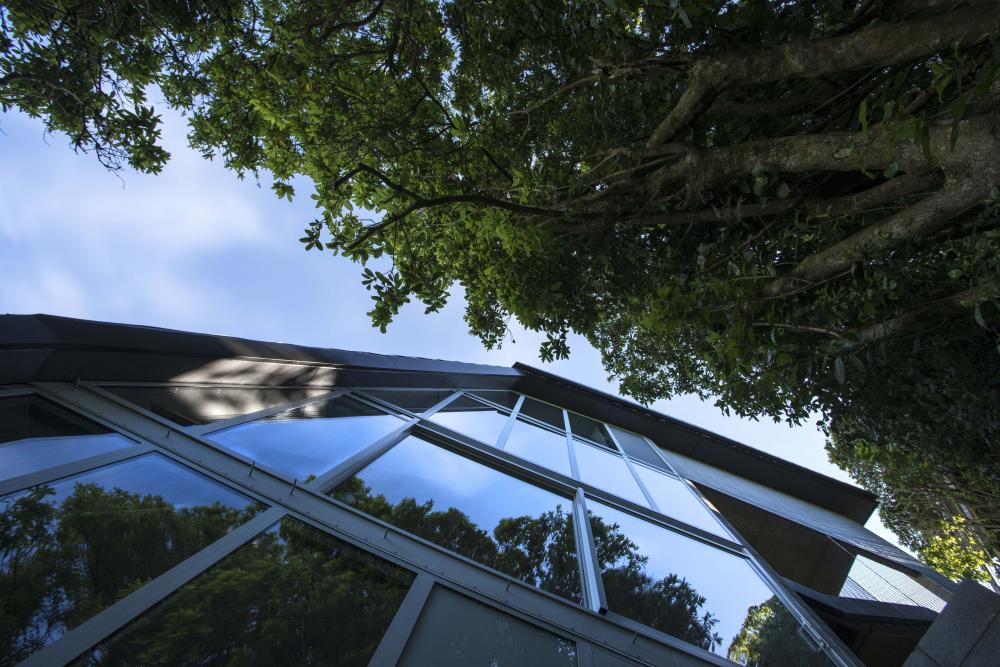
The downhill wall is effectively wrapped in the COLORSTEEL® roof which folds from 15 to 77-degrees, giving the opportunity for the architecture to follow. Windows form the bulk of the north-facing wall and large “skylights” celebrate the eastern view across Wellington to the harbour.
Living in such a differently-constructed house challenges occupants and visitors in different ways too.
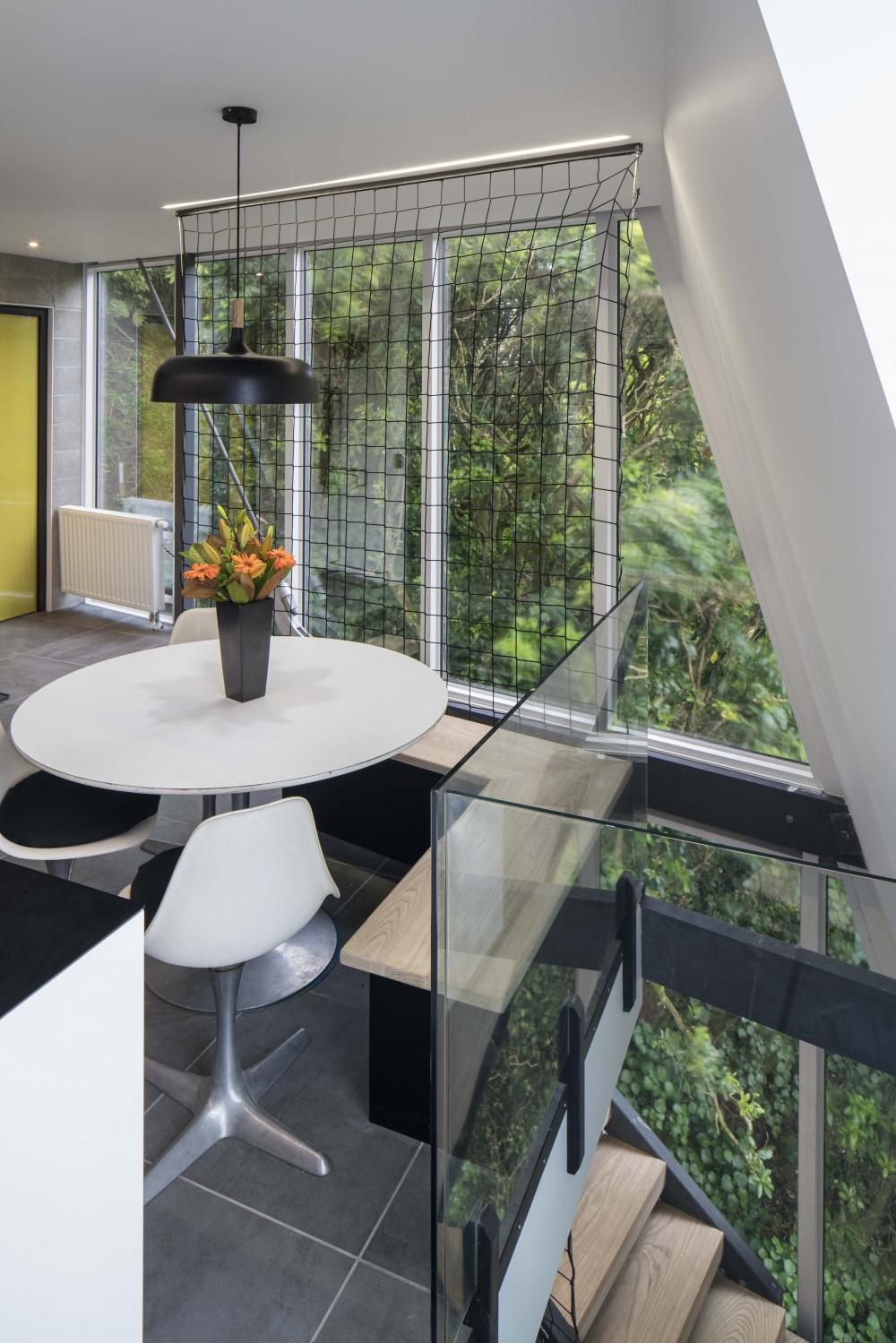
A glass elevator acts as a hallway from the road level at the garage, and internal stairs additionally provide connections between levels within the house. The rooms necessarily connect vertically, ie. down the cliff face, instead of horizontally - which allows the magnificent views across Wellington to be enjoyed from almost every room. Bed- and bathrooms are situated on the upper and lower floors, with the two middle floors open and devoted to living and kitchen areas, serving the same function as more traditional kitchen/dining/living areas in a horizontally-aligned house.
Because a regenerating forest area fringes the site, the family are able to see from canopy to undergrowth as they move down through the building, routinely seeing (and hearing) kereru, tui, kaka and other native birds from their northern-facing glass wall.
A wooden deck extends north from the living area, giving optimal light and privacy for barbeques and other outdoor functions.
The myriad technical challenges are celebrated inside the house with exposed steel members, a simple monochrome colour scheme throughout, asymmetrical windows, and internal mesh walls and glass balustrades separating areas without compromising light flows across the two middle, living levels.
“Actually, the rooms on the lowest level feel like they’re the highest above ground,” says Nic. “This is because the cantilever is most obvious at this level.”
The family enjoys living in such a different house, and with so many stairs it can be great for personal fitness. “Mind you, the lift is great if you’ve left something in the car,” laughs Nic. Then he gets serious.
“As an architect I see a lot of cut-and-paste projects, where ideas are gathered from here and there and pulled together. That’s not architecture,” he declares.
Certainly no one can accuse this house of being a cut-and-paste project.