
Overflashed (Watershed) Backflashings
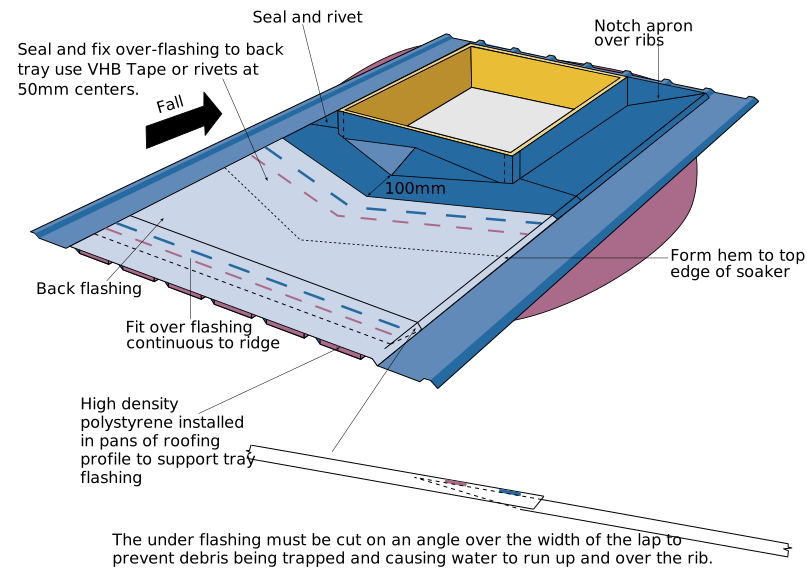
The maximum width of a watershed flashing manufactured in one piece is controlled by the coil width of 1.2m. The practice of making wider watershed flashings by running sheets horizontally with laps at 1.1m (“lobster back”) is allowable depending on circumstances.
Factors which may encourage the use of lobster back over-flashings include:
- Is the pitch very low, making an underflashing hard to make watertight?
- Is it unseen from the ground?
- Is the roof in place before creating the penetration?
- Will there be little or no foot traffic on the flashing?
The weathertightness of lobster-back flashings can be made more secure by using good technique, particularly by supporting the flashing seams where they span the pan of the profile by putting high-density polystyrene or similar in the pans. The number of rivets required can also be reduced by sealing the joints with Extra Heavy Duty double-sided tape. See Cricket Under-Soaker: Trapezoidal.
Wider watershed flashings can be fabricated using longitudinal standing seam techniques on suitable support.
- Log in to post comments