
Modernisation of NZ made coil production


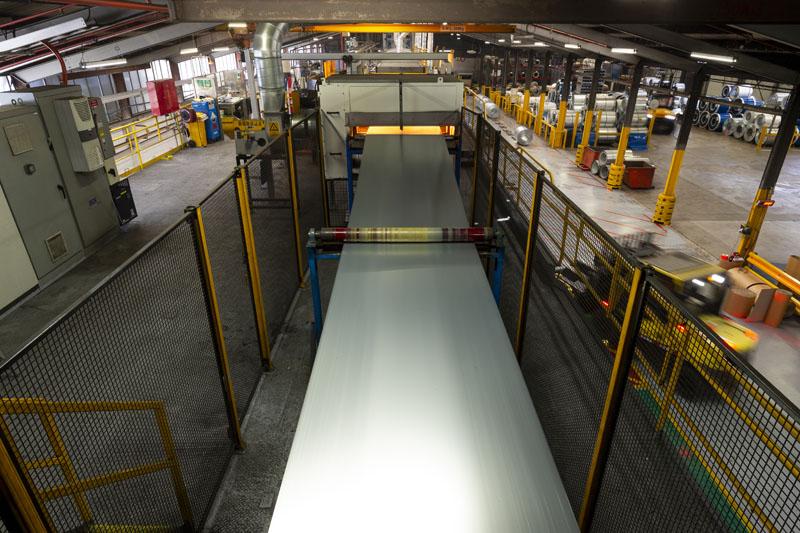
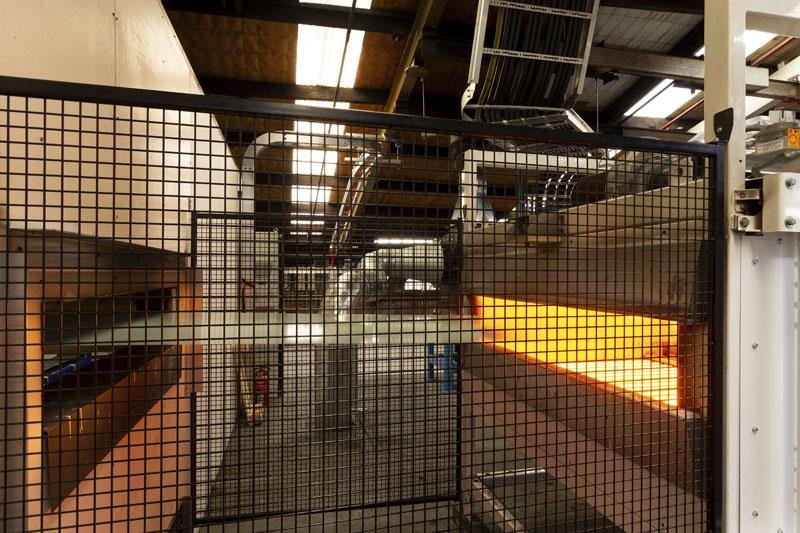
The PCC Oven Upgrade
Within the construction sector, steel stands out as one of the most sustainable options available. Not only is it a key component in building design and construction, it’s recyclable and reusable nature allows it to be used multiple times that help reduce its environmental impact.
Steel’s metallurgic properties means that when recycled, no degradation occurs allowing it to be melted down and reused an infinite number of times without compromising its structural integrity whilst using significantly less energy than producing steel from raw materials.
The challenge for a business such as Pacific Coilcoaters, the manufacturer of the ColorCote® range of pre-painted metal coiled product used in roofing, cladding and rainwater goods, is how to efficiently process the raw steel (and aluminium) coils in the painting process and to minimise the impact on the environment via the energy used and any greenhouse gases that may be emitted.
Since the inception of Pacific Coilcoaters, the paint curing process, which is effectively the same world-wide, has been conducted via the use of gas fired ovens with the business being one of the larger commercial users of gas in the Auckland region.
In 2021 with the existing paint line ovens nearing their end of life the business decided to challenge the “status quo” and embark on an ambitious program that was focussed on a more innovative approach to their replacement which would be better for the environment, meet changing customer expectations around the environment and to contribute to Fletcher Building’s goal reducing carbon emissions by 30% by 2030.
Simply put, the strategy was to significantly decarbonise the business as much as possible. Following extensive research looking on global best practise, the final decision was made to replace the existing and outdated technology with a total of three electrically powered Near Infrared (NIR) ovens at a total project cost of circa $10 million.
Whilst seen as a common curing technology of paint in the aerospace and automotive industries, the use of NIR ovens in coil coating is rare. But the decision to install NIR ovens was seen by the wider business as a significant innovative move and to signal a firm commitment by Pacific Coilcoaters to help decarbonise the sector.
Coupled with this position was the added benefits of greater temperature control across multiple oven stages, less overall energy wastage, and improved quality control.
Traditional gas fired ovens are effectively giant hot boxes that require a lot of energy and time to reach their operating temperature, whilst NIR ovens operate in a similar way to a domestic bread toaster that is laying on its side. When the ColorCote® paint line is turned on, the NIR oven elements are activated and reach their required temperature almost immediately. When the paint line stops, the NIR ovens turn off immediately until they are needed again, unlike a gas oven that may have to be left running and consuming gas to help maintain its internal core temperature thus generating CO2 emissions even when the paint line is not running.
Following a lengthy period of planning that included the pre installation of two large power transformers and 3.7 km of 44mm power cables weighing more than 7.5 T, the old gas ovens were decommissioned in early April 2023, and the new NIR oven installation finishing some 6 weeks later.
The NIR oven installation was also complimented by the commissioning of a state-of-the-art Regenerative Thermal Oxidiser (RTO) that incinerates all of the emitted volatile organic compounds (VOC) at a temp in excess of 750degs Celsius.
During the installation and commissioning period the business continued to support and supply it’s customers with all key product requirements as a result of working closely with them prior to the project commencement and through the use of its various product stocking models.
Following a successful installation program, the NIR ovens showed an immediate and expected dramatic reduction in CO2 produced per Tonne of product painted, with this reduction sitting at an average of 59% from its peak.
Coupling this new paint curing technology together with ColorCote®’s strategy of utilising water based paints combined with MagnaFlow™’s position of having the one of the lowest embodied carbon footprints within the pre-painted steel industry, means that customers can use ColorCote® products confident in the knowledge that they are working alongside a company that is focussed on delivering product that is not only “fit for purpose” but also doing what it can to minimise the impact on our fragile environment.
For further information on either ColorCote® products or this exciting project please contact us via enquiries@colorcote.co.nz
Glenbrook Electric Arc Furnace
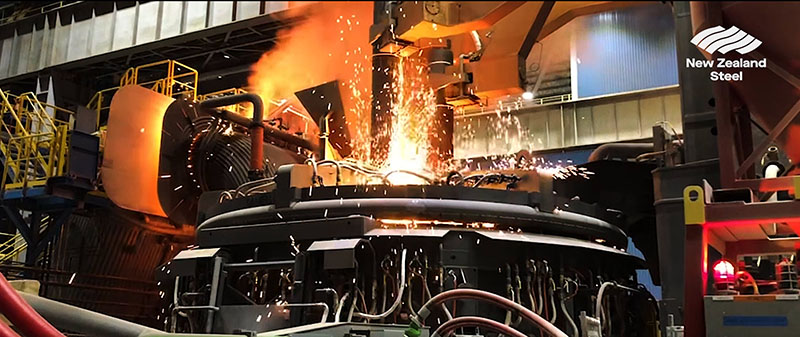
New Zealand Steel partners with Government in $300M co-investment to shrink carbon footprint of Glenbrook steel mill
New Zealand Steel has been busy over the last 12 months, helping to secure a more sustainable future of steel making in New Zealand with an Electric Arc Furnace through a co-funded deal with the NZ Government.
New Zealand Steel will build a new $300M Electric Arc Furnace at its steelworks at Glenbrook within the next three years as part of the move to lower carbon production.
Chief Executive Robin Davies says the significant investment will reduce Glenbrook’s carbon footprint by 800,000 tonnes from day one – the same as taking approximately 300,000 cars off the road permanently.
“That’s a reduction of over 45% in New Zealand Steel’s emissions – or a total of 1% of New Zealand’s total annual emissions. It also sets the platform for further carbon reductions and is a significant step towards our goal of net zero by 2050.
“These reductions will come from replacing Glenbrook’s existing oxygen steelmaking furnace and two of the four coal fuelled kilns.
“An electric arc furnace makes sense when there’s enough affordable renewable energy and scrap steel available, a way to get that scrap steel to site, and the right policy settings. We’ll firm up the details of the different aspects of the project over the coming months but crucially, New Zealand has all these essential enablers in place.
“A reliable supply of firmed renewable energy is critical to this initiative and we’re delighted by the pioneering and creative partnership with Contact Energy to provide a competitive and innovative supply agreement. The electric arc furnace provides New Zealand Steel with significantly more production flexibility which means we can scale down production at times of peak demand or supply shortages.
Mr Davies says New Zealand Steel and the Government will jointly invest total capital and transition costs of around $300M in this landmark partnership to shrink Glenbrook’s carbon footprint.
“The Government will contribute up to $140M through the Government Investment in Decarbonising Industry, or GIDI fund, administered by EECA, as a co-investment. This project would not happen otherwise. This is a bold breakthrough initiative by the Government – but it’s the right one, especially when you see the carbon reduction dividend that helps the country meet its global decarbonisation targets under the Paris Agreement.
New Zealand Steel will commit the additional $160M, which includes the planned investment at Glenbrook to underpin the future of steelmaking in New Zealand. The immediate focus is to move at pace over coming months to confirm the remaining critical aspects of the new operation, including the relevant regulatory approvals.
“From our perspective, this is a necessary step to secure steelmaking in New Zealand for many years to come. I’m delighted to say this is a great example of business and Government working together to meet the country’s goal of net-zero emissions by 2050.
The Managing Director and CEO of New Zealand Steel’s parent company, BlueScope, Mr Mark Vassella attended the announcement with the Prime Minister and says the co-investment is a landmark deal that showed the power of well-constructed public/private partnerships or investments.
“New Zealand Steel and the Government should be very proud of their initiative and the hard work that has led to today’s announcement,” Mr Vassella says.
Mr Davies says: “Steel is infinitely recyclable and this model will make New Zealand as close to self-sufficient as possible using renewable energy to recycle domestic scrap steel, rather than shipping it offshore.
“This project is a partnership that would never have happened without the support of the Government and the other key contributor Contact Energy who recognised the potential and had the commitment to help make it happen.
“This is a pragmatic response that not only sustains our critical domestic steel supply, but also provides a collaborative approach with government and industry to be world leaders in lower emissions steel.”
New Zealand Steel, our country’s sole producer of flat rolled steel products, manufactures and markets a range of products for the roofing sector. Their COLORSTEEL® brand is one many of you will be familiar with, along with ZINCALUME®. Their steel is also used across the country for steel framing (AXXIS®) and structural beams.
Specifically, for our industry, the importance of a domestic supply is vital. This investment is key to ensuring key products continue to be produced locally, and the EAF will mean that the steel itself will out perform the world average in terms of embodied carbon, enabling New Zealand Steel to produce steel with an average embodied carbon per tonne of 1.6 tonnes CO2/tonne steel (the world average is 1.9 tonnes CO2/tonne steel). The New Zealand Steel published Environmental Product Declarations (EPDs) for steel products will be updated in the future to reflect this dramatic shift in production method.
Another benefit of the EAF, is the establishment of a significant domestic scrap steel recycling loop, avoiding the cost and carbon miles of exporting about half of NZ’s scrap steel – about 300,000 tonnes a year.
It’s great to know that in the future, the steel you recycle on site, could then make it back to the mill and see life again as a brand new roof somewhere else across the country.