
Crevice Corrosion/Wet Storage Stain
Roofing materials exposed to air and moisture react with the atmosphere, with the help of their passive coating, to form stable and corrosion-resistant surfaces. This occurs with both metallic coated (galvanised and Zincalume) and pre-painted roofing materials. Exposing these materials to water in the absence of air causes the formation of unstable surface films.
Design details that trap moisture, dirt, and debris should be avoided.
Corrosion can occur even with a chemically neutral electrolyte. An example of this type of corrosion is the corrosion on metals underneath paint coatings and “white rust” — the wet storage stain on closely nested zinc and aluminium/zinc coated roofing sheets. Other metals such as non-ferrous metals can suffer similar damage.
White Rust due to Capillary Action
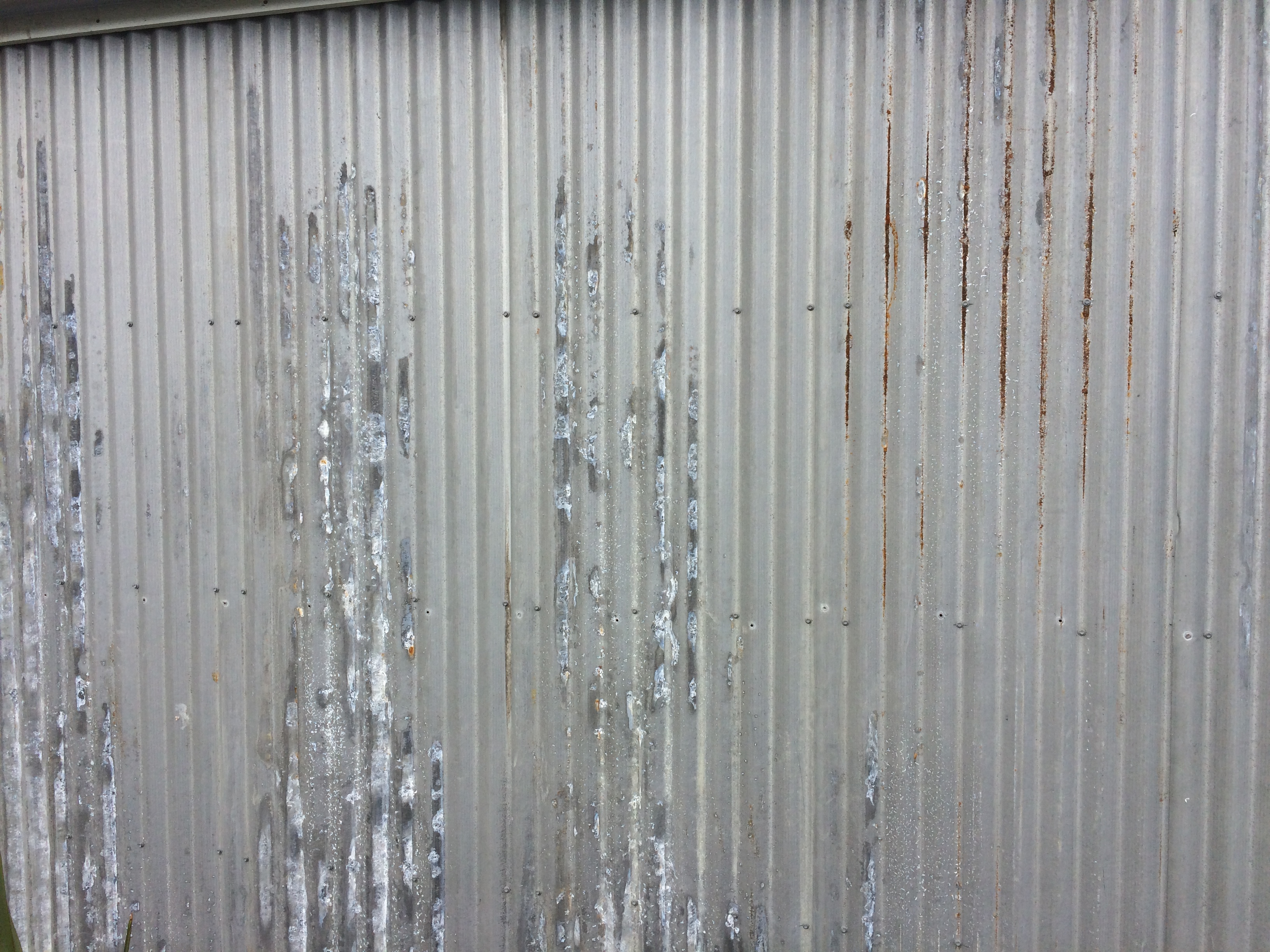
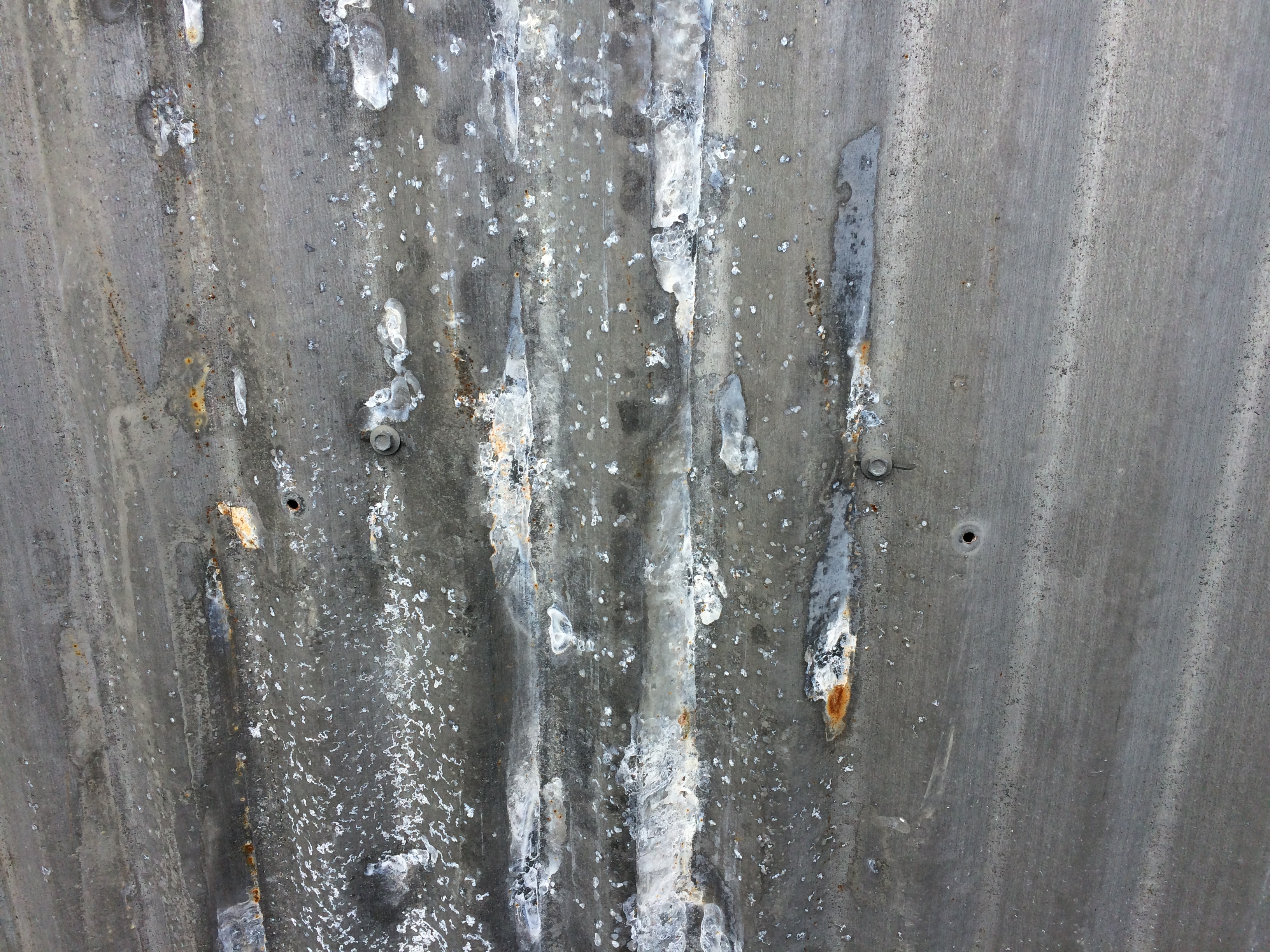
Bulky white deposits on the surface of coated products indicate rapid consumption of the protective coating and can quickly lead to red rust.
If end-lapping of roof sheets cannot be avoided, both ends of the lap must be continuously sealed to ensure that neither condensation run-off from the under-surface nor rainwater run-off enters the lap.
Capillary action can cause water to be drawn into closely stacked sheets, resulting in crevice corrosion or wet storage stain on both metallic-coated and non-ferrous materials. On metallic-coated steel sheets, the passivation coating gives some temporary protection against this process, as do organic coatings, but longevity cannot be guaranteed for the duration of this protection. On non-ferrous metals, wet storage stain can commence very rapidly.
Wet packs of sheets should be separated to allow surfaces to dry before substantial storage.
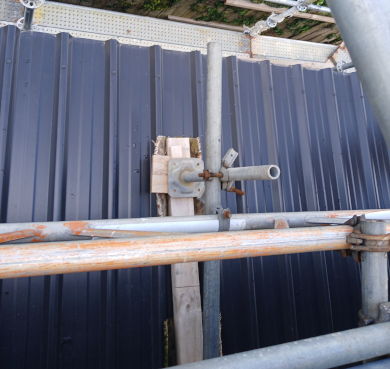
If it is essential to use a lower roof as a stage for scaffolding, the scaffold should be supported from the ribs and separated from the roof surface by a resilient, inert, non-absorbent, pH-Neutral, and compatible material. Carpet does not necessarily fit these criteria. There is no stipulated “safe” period of exposure. It is up to the contractor to minimise the time of exposure and monitor the condition of the material.
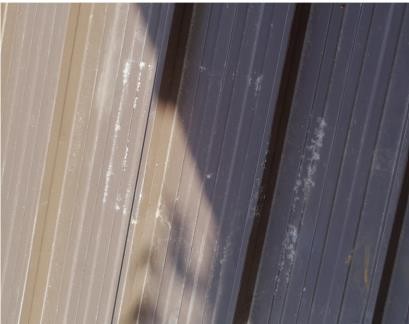
If wet storage stain appears on unpainted surfaces, the degree of erosion of the metallic surface may be slight despite the bulky appearance of the deposits. However, when left unchecked it, can quite quickly lead to substantial degradation.
Even if the damage is superficial, the white deposits must be removed to allow exposure to the air to allow the normal formation of stable surface films. Use a stiff bristle brush; wire brushes are not recommended as they will remove more of the protective coating.
- Log in to post comments