
Nikau House

Nikau House
Like many downsizers, the owners of this Parnell townhouse wanted something that was more ‘lock up and leave’ after their children had left home and they sold the Remuera family home.
As they explain, “After we had sold in Remuera we ended up renting in Parnell. We didn’t know Parnell that well but we got to know it and decided it was a great place to live.
“The problem was we couldn’t find anything we wanted to buy.”
So when a site that had been subdivided into four lots came up, the couple purchased one to build on.
Before they bought the 500sq m site, they enlisted the help of SGA (Strachan Group Architects) to make sure it was suitable.
“We were interested in the sight lines and views of the harbour we would get if we built a two-storey home,” the couple says.
“We knew we wanted some very basic things like three bedrooms and downstairs living - upstairs has views of the harbour but we wanted downstairs living for the indoor-outdoor flow.”
They also wanted a warm, well-ventilated home that was inviting for themselves and guests.
“The emphasis was more on the feeling of the house; how you felt when you walked through the front door.”
Not only did the couple get the architects involved early but also their builder.
“In the design process there was a lot of to-ing and fro-ing but one of the pluses was having the builder involved as we finalised the design so we had buy-in from a lot of people and that helped with the design.”
The NZIA certainly agreed: giving the home two local awards in the Residential and Sustainable Architecture categories.
Lead designers Pat de Pont and Dave Strachan, of SGA, say the brief was to create “a light, airy, modernist design aesthetic in a house that could easily accommodate visitors and family when they come to stay. The challenge lay in creating an innovative design within a tight urban context whilst still providing privacy, amenity and quality of indoor and outdoor space on a small site”.
The architects also had to “future proof” the home, giving it privacy from whatever might be built on the section closest to the street while providing bush and harbour views.
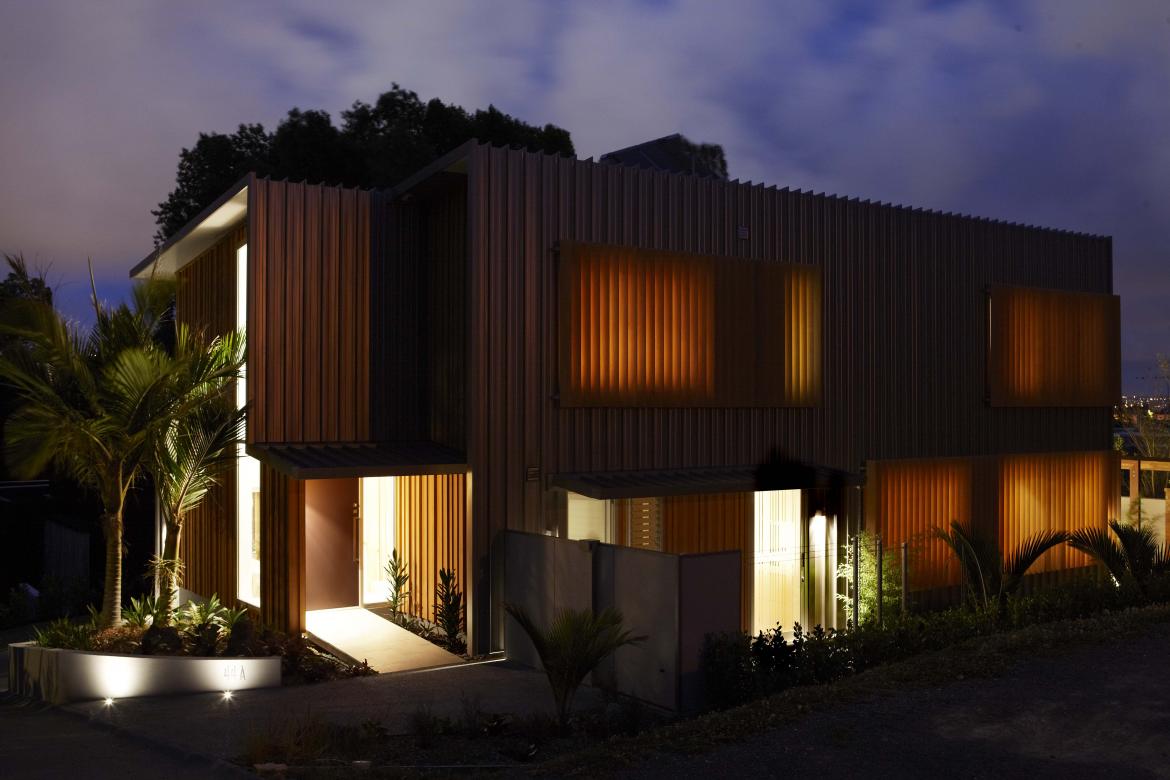
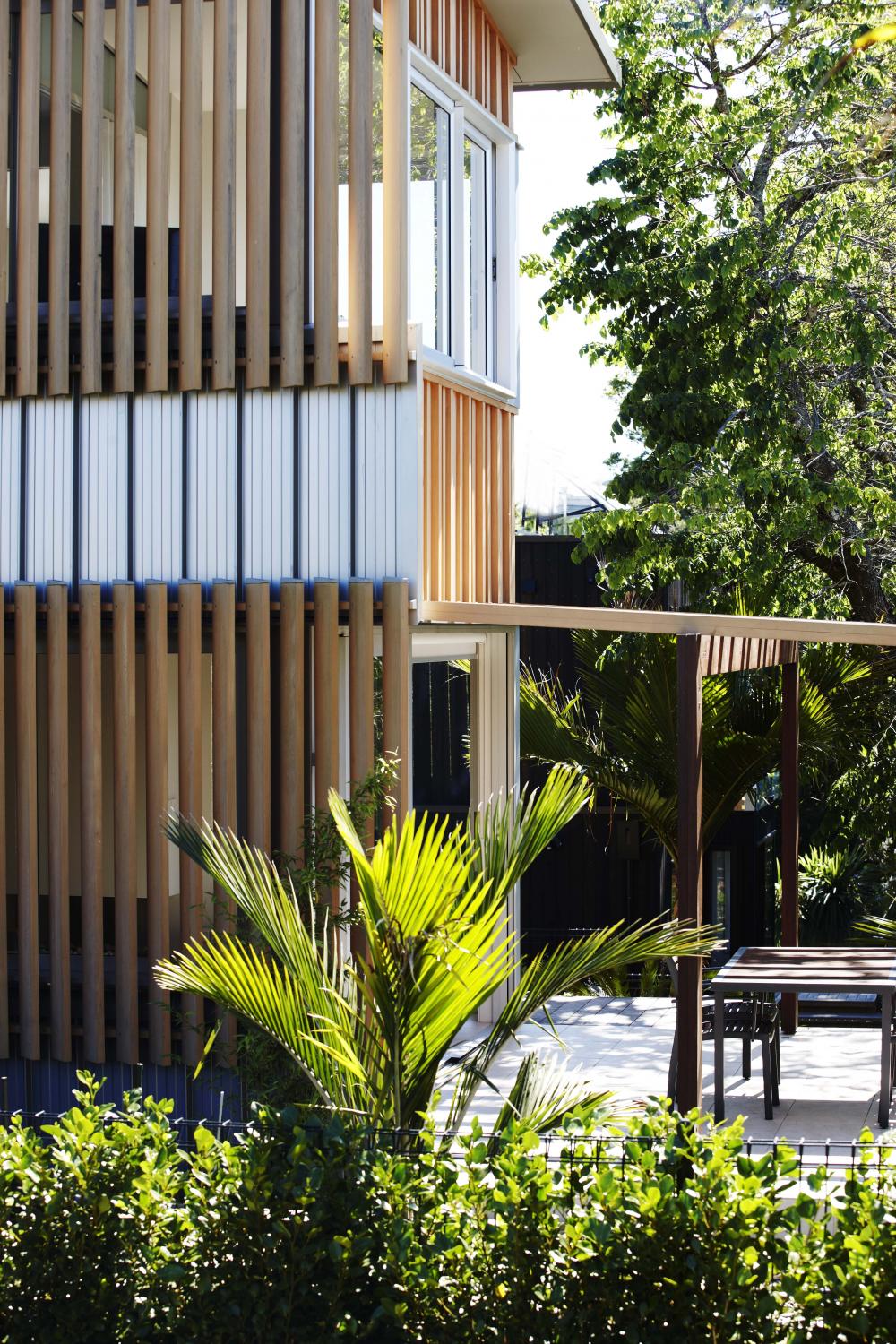
The architects say, “The trapezoidal roofing wraps around the structure to form the eastern wall - combined with slatted exterior timber screens to provide further privacy from future developments
“Considered placement of windows frame the views to the lush green bush gully, existing nikau palms and the Waitemata Harbour to the north.”
And they had to accommodate the couple’s desire for wall space to display art and to hold their book collection.
They did this by stepping the building down the site’s natural contour, “creating over-height spaces to the west, and allowing for the library’s tall shelving wall”
The architects were also required to fulfil the clients’ desire for a robust, sustainable home but with a pleasing aesthetic.
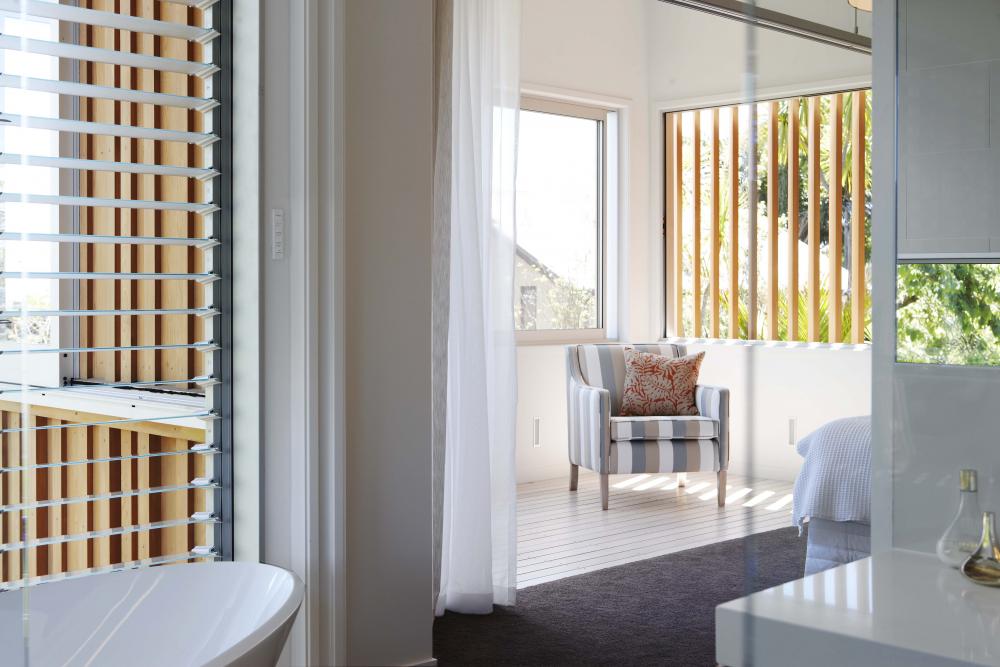
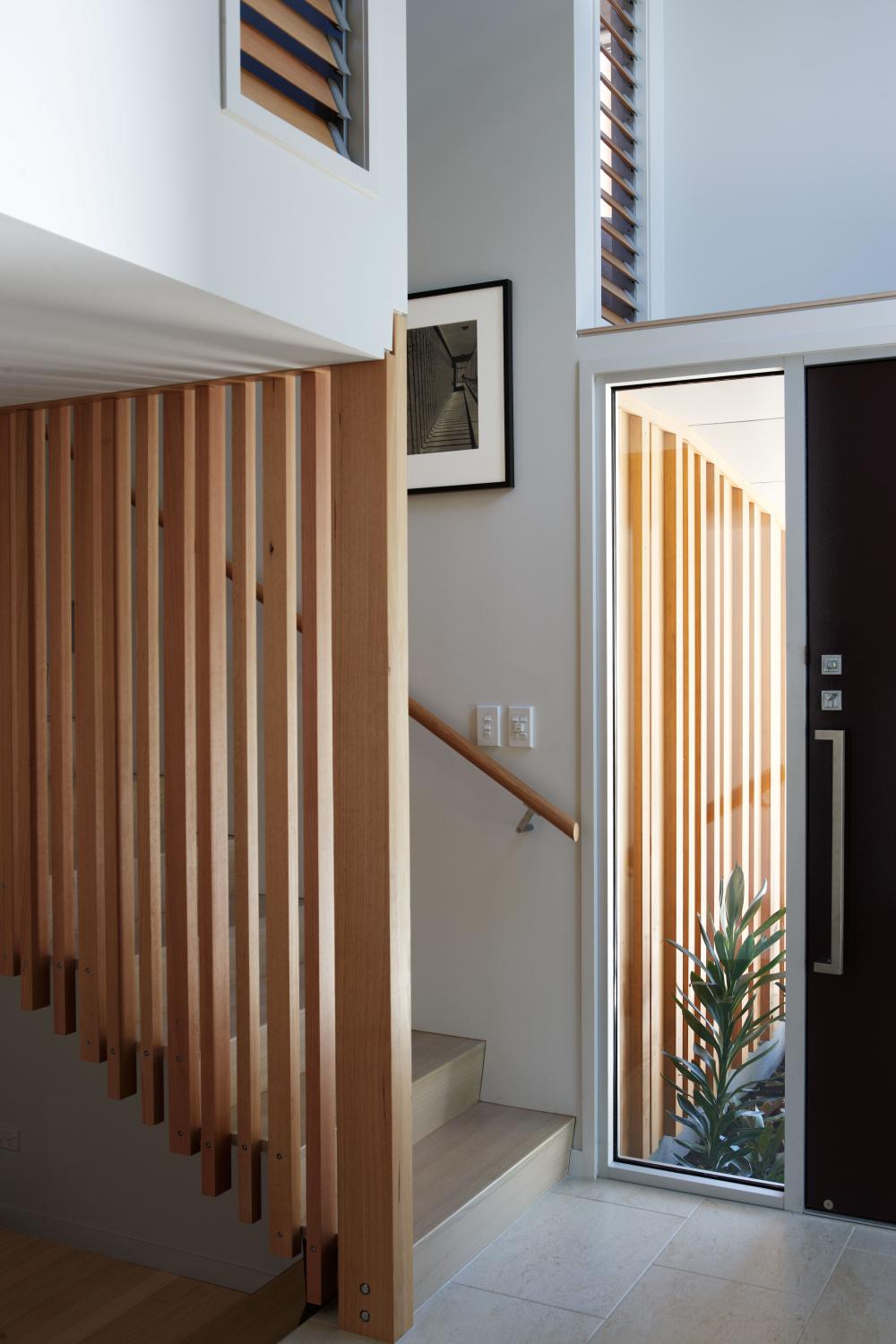
“An intrinsic approach to sustainable design is demonstrated in the garden and solar water systems, thermal mass and cross-ventilated spaces. Timber decking is used internally to create a floor that breathes, this combined with internal timber louvres in the upper level bedrooms creates convection airflow to passively heat and cool the home. The slatted screens also act as shading devices, helping to regulate the internal temperatures - casting patterns of shadow on the sunlit interior spaces,” the architects say.
“Materials have been selected for durability and a refined aesthetic. The timber and light colour palette reference Scandinavian design and provide a backdrop to emphasise the bold modern art collection. The result for the satisfied clients is a serene, quiet urban retreat with an understated luxury.”
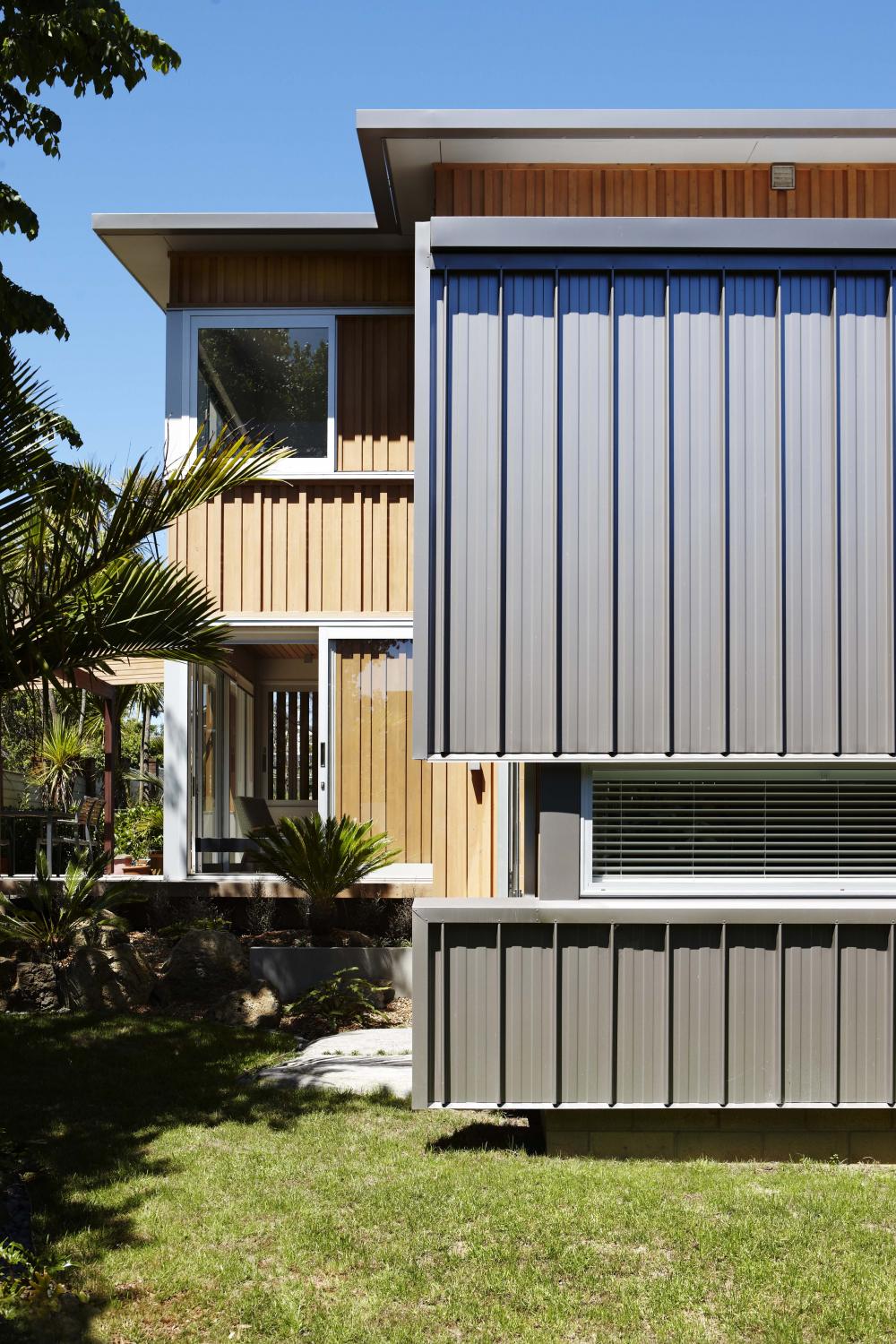
The couple say that using Roofing Industries Colorcote ZRX for roofing and cladding was a cost-effective solution but they also love the colour - Gunmetal – and the profile, which give the home sharp, clean lines. That is shown to greatest effect where the roof folds down the side of the house in a waterfall effect with the junction between the two a Canterbury Prickle to continue the clean lines.
“We liked the look of houses that used zinc so we tried to do something along similar lines but in a less expensive material,” they say. “And we like the variations of shade and colour that the profile creates depending on the way the light hits it.”
“Having a sharp look was really important to us,” they add. “It was quite a tricky process but the roofers were convinced they could do it and they delivered.”
Roofer Sean Thorburn, of Pacific Roofing, admits that trying to achieve that look had him worried and he spent weeks sweating on it.
“I did try to talk the owners out of it because it would have been a lot easier for me to put a head barge on,” Sean says. “But they were determined that was what they wanted so I had to go away and work out how to make it happen.
“It was keeping me awake at night and then I actually had a dream about making a folding tool for it and woke up in the middle of the night and scribbled some things down for an engineer mate. We ended up making a custom tool for the job that slotted in the profile and clamped in there with big screws that we could use as a folding tool.”
Sean says they experimented with the tool on short sheets of Colorcote ZRX to make sure it would do the job.
“So when we got to the site it looked like we had done it 100 times before,” Sean says. “But it was still a tricky process because we were working with 16 metre long sheets and I think the first day we managed to lay two sheets and from then on four or five a day.”
Sean says the sheet measurements had to be precise and once cut they were folded to 90 degrees then straightened out a little so a team of up to five workers could manhandle them into place.
He says because architect Dave Strachan has a carpentry background, he was “very fussy about the detailing” of the cladding and roofing.
“Every screw had to line up and with the Canterbury Prickle he wanted the fixing through the tops and sides of the ribs rather than through the pan.
“He didn’t like the idea of penetrating the pan even at the high point so all those things were detailed with him in the office. The holes were measured and marked and pre-drilled so that they were at points where the water is running off them rather than sitting on them.”
Sean says the same attention to detail was focused on the flashings.
“The set-out had to be perfect for the 100mm detail around the joinery and every single rivet on the flashing lines up because it was measured and marked.”
Sean adds, “It pushed us to the limits but it’s some of the best work we have done and we’re very proud of it.
“It’s a real detail of that house because as you come in that is what you see. The end result speaks for itself because it’s a beautiful house.”
The colour of the roof and cladding was matched with the architectural style of aluminium joinery used throughout the house to continue the theme of elegance and simplicity.
Inside, it’s the same story with blonded timber creating a clean, timeless look, and the timber slats over the windows casting interesting shadows. Cleverly placed lighting makes the timber slats glow like lanterns at night.
As the couple say, “The challenge was to keep it simple, beautiful and elegant and that took good workmanship and attention to detail.”